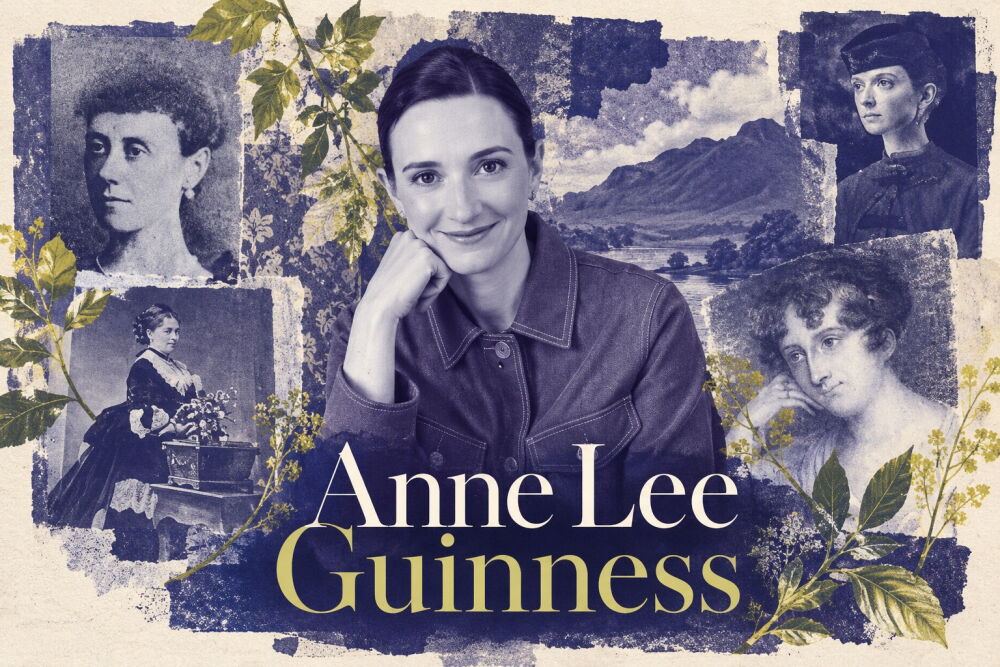
The nursing work associated with St Patrick’s Cathedral gives Anne Lee Guinness a historical identity beyond the wealth of her surname. In 1876, her charitable activity developed into St Patrick’s nursing home, connected with the training of Church of Ireland nurses. I find that practical institution a stronger introduction than imagining her life solely through a brewery fortune or a modern television drama.
Anne, also called Annie, lived from 1839 to 1889. After marriage, she became Anne Lee Plunket and later Baroness Plunket. She belonged to the Guinness family by birth and the Plunket family by marriage, connecting two prominent strands of nineteenth-century Irish society.
Identifying the Right Anne
Anne Lee Guinness was the daughter of Sir Benjamin Lee Guinness and Elizabeth Guinness. She should not be confused with an earlier Anne Lee who married Arthur Guinness II. Similar names recur across the family, making a clear generational starting point essential.
Her birth year was 1839. June 11 is sometimes given as her birthday, but the precise day is less firmly established than the year. I would keep that qualification visible, especially because June 11 is also her securely documented wedding date in 1863.
| Detail | Established or carefully qualified information |
|---|---|
| Birth name | Anne Lee Guinness |
| Familiar form | Annie |
| Birth year | 1839 |
| Parents | Sir Benjamin Lee Guinness and Elizabeth Guinness |
| Marriage | June 11, 1863 |
| Married title | Baroness Plunket |
| Death | November 8, 1889 |
Her life ended at about 50. A precise age on her wedding day depends on accepting the less securely established birthday, so I would avoid turning that into an exact calculation.
Parents and the Guinness Brothers
Her father, Sir Benjamin Lee Guinness, was born in 1798 and died in 1868. He was a brewer, civic figure, and philanthropist. Anne grew up in a prosperous family whose public influence extended beyond the brewing business.
Her three brothers were Arthur Edward Guinness, Captain Benjamin Lee Guinness, and Edward Cecil Guinness. Arthur later became Baron Ardilaun, while Edward became Earl of Iveagh.
I would be especially careful with the younger Benjamin’s name. Captain Benjamin Lee Guinness was Anne’s brother, while Sir Benjamin Lee Guinness was their father. Combining them into one person can distort both the family tree and its chronology.
The family’s wealth provided an important setting for Anne’s adult opportunities. It does not establish that she held an executive position in the brewery or personally owned every asset associated with the family name.
Marriage to William Conyngham Plunket
Anne married William Conyngham Plunket on June 11, 1863. Born in 1828, he was a Church of Ireland cleric who later became bishop of Meath and archbishop of Dublin.
He succeeded to the barony in 1871, making Anne Baroness Plunket. His appointment as archbishop of Dublin in 1884 placed the couple within a particularly visible religious setting during the final years of her life.
Their shared interests included education and religious charitable work. I see those overlapping concerns as meaningful context, while keeping their responsibilities distinct. Anne did not hold her husband’s church offices, and his promotions should not be listed as her professional appointments.
Six Children in the Plunket Household
Anne and William had six children, born between 1864 and 1879. Their eldest son, William Lee Plunket, later became the 5th Baron Plunket. Benjamin John Plunket followed a clerical career.
| Child | Lifespan |
|---|---|
| William Lee Plunket | 1864 to 1920 |
| Elizabeth Charlotte Plunket | 1868 to 1914 |
| Benjamin John Plunket | 1870 to 1947 |
| Olivia Anne Plunket | 1873 to 1896 |
| Kathleen Louisa Plunket | 1877 to 1956 |
| Ethel Josephine Plunket | 1879 to 1937 |
The daughters’ places in the family are established more clearly than equally detailed independent biographies for each. I would not fill that imbalance with assumed marriages, occupations, or personalities.
Similarly, a complete descendant list would require more than recognizing familiar Plunket names. Later generations should not be attached to Anne without checking the connecting parents in between.
Nursing and Relief Around St Patrick’s
Anne’s central public contribution involved nursing and assistance for people living around St Patrick’s Cathedral. Her work developed into St Patrick’s nursing home in 1876, with an association with training Church of Ireland nurses.
That achievement was institutional rather than merely symbolic. A nursing home and a training function imply continuing care and organized support, although the available biography does not provide a complete operational history or annual budget.
I would not give her a modern clinical qualification or assume she personally performed every task. Her documented contribution is philanthropic support and development of the work.
She also supported the Irish Clergy Daughters’ School and Alexandra College. Together, these interests connect care and education, two practical ways of shaping opportunities beyond a single charitable gift.
Wealth Without an Invented Balance Sheet
A £49,000 marriage dowry is frequently associated with Anne and improvements at Old Connaught House and its garden. The underlying evidence for the exact amount is not sufficiently established here, so I would describe it as a repeated claim rather than a verified personal financial total.
No reliable net worth, probate value, or full reconstruction of her finances is available in this account. A family brewing fortune is not a personal balance sheet for every daughter and sibling.
Death and Modern Portrayal
Anne died on November 8, 1889, after a degenerative illness. A more specific diagnosis is not firmly established here. She was buried in the Guinness family vault at Mount Jerome and commemorated at St Patrick’s Cathedral in connection with care for the poor.
Modern attention increased with House of Guinness, in which Emily Fairn portrayed her. I would treat the series as a fictionalized interpretation. Its private conversations and dramatic scenes cannot be used as a substitute for established historical events.
FAQ
Who was Anne Lee Guinness?
She was an Irish philanthropist, daughter of Sir Benjamin Lee Guinness, and wife of William Conyngham Plunket. She later held the title Baroness Plunket.
When did she marry?
She married William on June 11, 1863. He later became archbishop of Dublin.
How many children did she have?
She had six children: William, Elizabeth, Benjamin, Olivia, Kathleen, and Ethel.
What was her charitable work?
Her work included nursing and relief around St Patrick’s Cathedral, support for nurse training, and involvement with educational institutions.
When did she die?
She died on November 8, 1889. Her husband survived her until 1897.