Who Anthony Armstrong Jones Was
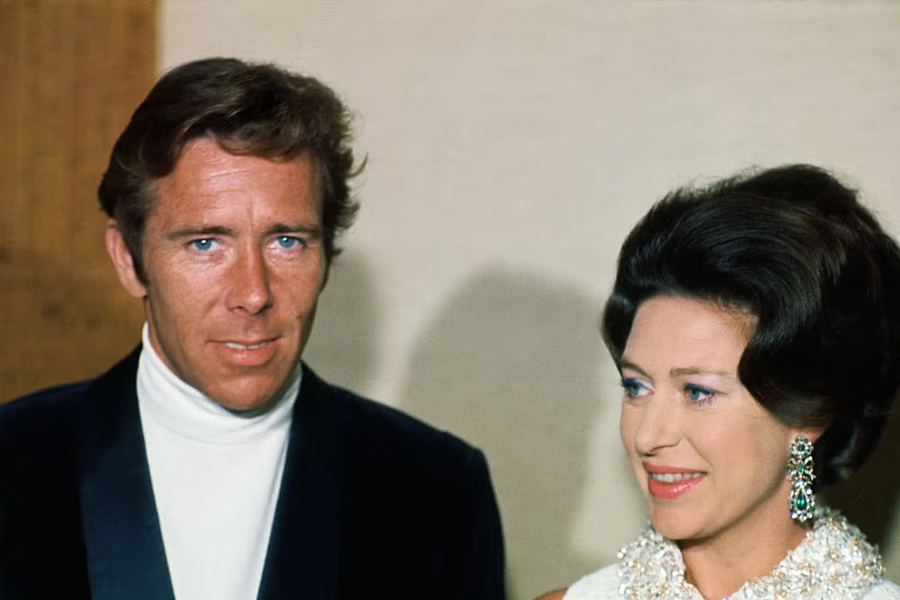
I see more than a royal headline in Anthony Armstrong Jones’ life. The world knows Antony Charles Robert Armstrong-Jones, 1st Earl of Snowdon, born in Belgravia, London, on March 7, 1930. He died at 86 in Kensington on January 13, 2017. He lived through photography, cinema, design, aristocracy, familial complication, and disability advocacy between those dates.
His marriage to Princess Margaret is commonly associated with him, yet it is merely one frame in a broader gallery. He was an artist with a keen eye, a designer with practical vision, and a campaigner who translated personal experience into public purpose. Behind his polished exterior was brilliant, tangled, and occasionally hazardous wire.
Early Life and Family Background
Anthony Armstrong Jones was born into a wealthy, complicated family. Welsh barrister Ronald Armstrong-Jones was his father. Art and design ran in his family, including his mother, Anne Messel, subsequently Countess of Rosse. That familial branch mattered. Her brother Oliver Messel, a famous stage designer, influenced her creativity. Visual taste was not decoration there. It was language.
As a kid, his parents split in 1935. After marrying Lawrence Parsons, 6th Earl of Rosse, his mother produced two additional children. In Anthony’s youth, his sister Susan Armstrong-Jones was a faithful presence during his darkest times.
At age 16, he contracted polio while in Wales. The illness left him with a permanent limp. That experience shaped him. It did not simply become a private memory. Later, it would help drive his public work for disabled people. In many lives, suffering closes doors. In his, it also opened a mission.
Education and the Start of a Creative Career
Anthony Armstrong Jones attended Sandroyd, Eton, and Jesus College, Cambridge. He never finished his Cambridge exams, yet he kept improving as an artist. His artistic path was already forming. He started shooting photos as a child and turned it into a career.
He trained with social photographer Baron to master high-end portraiture. His first studio started in 1952. This date demonstrates how early he took photography seriously. He was no amateur who became famous by being around royalty. He was establishing his profession lens-by-lens, client-by-client
His fame began to increase in the mid-1950s. He shot theatrical, public, and social figures. His confidence came from knowing glamour and structure. A excellent portrait goes beyond a face. Tension, vanity, cleverness, loneliness, or charm are shown. He learned to catch flickers.
A Photographer with National Reach
The 1960s saw Anthony Armstrong Jones become one of Britain’s most famous photographers. His work included fashion, theater, society portraits, and royal commissions. His portrait photography career grew over decades as his photographs appeared in prominent journals.
Durability, not celebrity, is one of his greatest accomplishments. A big national collection has hundreds of his portraits. That prominence suggests his work was more than just trendy. Stayed relevant. His camera was mirror and scalpel. He could flatter and expose.
Cultural leaders, artists, writers, performers, and royals were his subjects. He became the royal photographer, a prestigious and trusted position. Many of his best photos are intimate rather than ceremonial. The person behind the pose seems to intrigue him even when photographing celebrities.
Marriage to Princess Margaret
By marrying Princess Margaret, the younger sister of Queen Elizabeth II, in Westminster Abbey on 6 May 1960, Anthony Armstrong Jones became recognized worldwide. It was the first royal wedding aired on television. It was a major media event witnessed by millions.
The marriage changed his public position overnight. In 1961, he was created Earl of Snowdon and Viscount Linley. With that, Anthony Armstrong Jones became Lord Snowdon in formal public life. It was a transformation that joined creativity, celebrity, and nobility in one dramatic arc.
Yet the marriage was never a fairy tale in the simple sense. It was glamorous, scrutinized, and historically important, but also strained. They had two children together, David Armstrong-Jones, born in 1961, and Lady Sarah Chatto, born in 1964. The marriage ended in divorce in 1978.
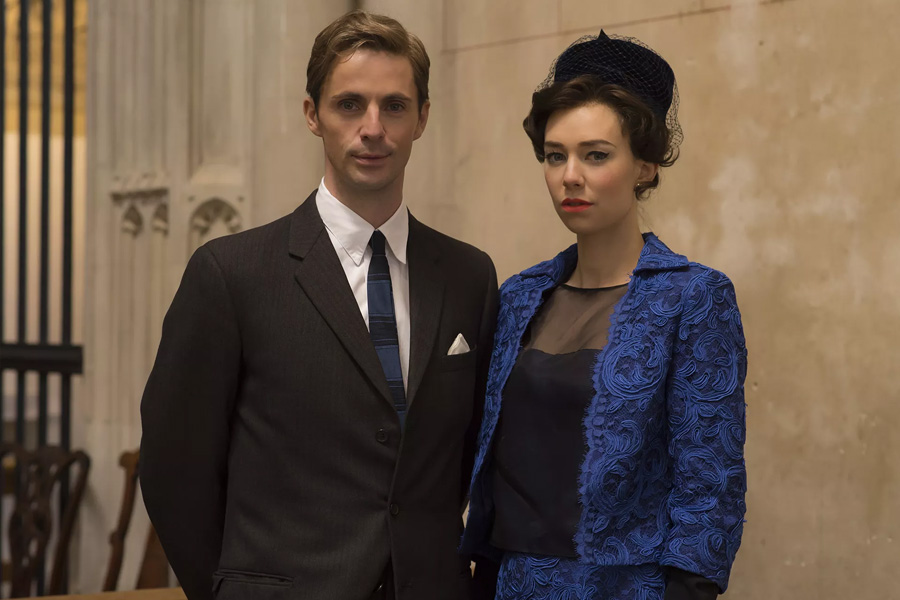
His Second Marriage and Other Relationships
Later in 1978, he married Lucy Mary Lindsay-Hogg, née Davies. She had previously been married to Sir Michael Lindsay-Hogg, 5th Baronet. This second marriage produced one daughter, Lady Frances Armstrong-Jones, born in 1979. That marriage lasted until 2000, when it also ended in divorce.
Anthony Armstrong Jones had a difficult personal life. Details regarding his non-married offspring emerged over time. After his paternity denial, Camilla Grinling Fry’s 1960 daughter Polly Fry became popularly known as his biological daughter. He had Jasper Cable-Alexander with Melanie Cable-Alexander, a Country Life editor. Jasper’s 1998 birth was linked to his second marriage’s end.
This family story is not neat or symmetrical. It is more like a house with formal rooms in front and hidden corridors behind. Publicly, he occupied one of the most visible positions in Britain. Privately, his relationships often reflected disorder, secrecy, and emotional cost.
Family Members at a Glance
| Family Member | Relationship to Anthony Armstrong Jones | Notable Detail |
|---|---|---|
| Ronald Armstrong-Jones | Father | Welsh barrister |
| Anne Messel | Mother | Later Countess of Rosse |
| Susan Armstrong-Jones | Sister | Visited him during polio recovery |
| Princess Margaret | First wife | Married 1960, divorced 1978 |
| Lucy Mary Lindsay-Hogg | Second wife | Married 1978, divorced 2000 |
| David Armstrong-Jones | Son | Born 1961, later 2nd Earl of Snowdon |
| Lady Sarah Chatto | Daughter | Born 1964 |
| Lady Frances Armstrong-Jones | Daughter | Born 1979 |
| Polly Fry | Daughter | Later acknowledged as biological daughter |
| Jasper Cable-Alexander | Son | Born 1998 |
Children and Grandchildren
His children symbolize different life chapters. He had Lady Sarah Chatto and David Armstrong-Jones with Princess Margaret. David took up the Snowdon title and remains famous. Sarah became famous for her low profile and aristocratic ties.
With Lucy Mary Lindsay-Hogg, he had Lady Frances Armstrong-Jones, who later became Lady Frances von Hofmannsthal. She has been associated with design and charitable work, including ties to the Snowdon Trust.
His later acknowledged children, Polly Fry and Jasper Cable-Alexander, added further layers to the public understanding of his family. Their place in his story reminds me that biography is rarely a straight line. It is often a mosaic assembled over time, with pieces revealed years apart.
Anthony Armstrong Jones had Princess Margaret-line grandchildren. These are Charles Armstrong-Jones, Viscount Linley, Lady Margarita, Samuel, and Arthur Chatto. These descendants have kept his name in the public eye, especially in royal and cultural coverage.
Design, Film, and Public Achievement Beyond Photography
Anthony Armstrong Jones was not limited to photography, his most famous medium. His work included movies and design. Don’t Count the Candles, his Emmy-winning documentary, is famous. That achievement proved his storytelling skills went beyond stills.
He participated in notable design projects. London Zoo’s Snowdon Aviary is famous. He patented an electric wheelchair in 1971. Such an innovation was not incidental. His latter disability activism was realistic and serious.
In 1969, he also had a significant role in the investiture arrangements for Prince Charles. This kind of work shows how unusual his career was. He moved between art studio, drawing board, documentary production, and ceremonial planning without seeming confined by category.
Disability Advocacy and the Snowdon Trust
For me, one of the most meaningful parts of Anthony Armstrong Jones’s life is his sustained advocacy for disabled people. His experience with polio was not erased by title, fame, or access. It stayed with him physically and psychologically. Instead of burying that history, he used it.
He founded the Snowdon Award Scheme, later the Snowdon Trust, in 1981. It promoted disability projects and opportunity. One of his greatest accomplishments was that initiative. Awards, exhibitions, and titles can change with fashion. Living altruistic legacies weigh differently.
If his photographs captured faces, his disability work addressed barriers. It was a shift from image to infrastructure, from observation to action.
Timeline of Major Life Events
| Year | Event |
|---|---|
| 1930 | Born in Belgravia, London on 7 March |
| 1935 | Parents divorced |
| 1940s | Educated at Sandroyd, Eton, and Cambridge |
| 1946 | Contracted polio at age 16 |
| 1952 | Opened first photography studio |
| 1960 | Married Princess Margaret on 6 May |
| 1961 | Created Earl of Snowdon and became father to David |
| 1964 | Daughter Sarah born |
| 1971 | Received patent for electric wheelchair design |
| 1978 | Divorced Princess Margaret and married Lucy Mary Lindsay-Hogg |
| 1979 | Daughter Frances born |
| 1981 | Established Snowdon Award Scheme |
| 1998 | Fathered Jasper Cable-Alexander |
| 2000 | Second marriage ended in divorce |
| 2017 | Died in Kensington on 13 January |
Why His Name Still Endures
Anthony Armstrong Jones remains compelling because his life touched so many worlds at once. He was a photographer of power, a designer with public imagination, a documentary maker, a titled figure within British aristocratic life, and a man whose family story never stayed simple for long.
Living lines of influence preserve his name. His photos circulate. His descendants survive. His charity endures. Interest is renewed in his workplaces and archive. Some figures are momentary. He does not. His life flickers in public memory like old silver.
FAQ
Who was Anthony Armstrong Jones?
Anthony Armstrong Jones, formally Antony Charles Robert Armstrong-Jones, 1st Earl of Snowdon, was a British photographer, filmmaker, designer, and disability rights campaigner. He was born in 1930 and died in 2017. He is also widely remembered as the former husband of Princess Margaret.
When did Anthony Armstrong Jones marry Princess Margaret?
He married Princess Margaret on 6 May 1960 at Westminster Abbey. The ceremony became the first royal wedding broadcast on television.
Who were Anthony Armstrong Jones’s parents?
His father was Ronald Armstrong-Jones, a Welsh barrister. His mother was Anne Messel, who later became Countess of Rosse.
Did Anthony Armstrong Jones have siblings?
Yes. He had one widely documented sister, Susan Armstrong-Jones. After his mother remarried, he also had two half-siblings through her second marriage.
Who was Anthony Armstrong Jones’s second wife?
His second wife was Lucy Mary Lindsay-Hogg, née Davies. They married in December 1978 and divorced in 2000.
How many children did Anthony Armstrong Jones have?
He is publicly associated with five children: David Armstrong-Jones, Lady Sarah Chatto, Lady Frances Armstrong-Jones, Polly Fry, and Jasper Cable-Alexander.
What was Anthony Armstrong Jones famous for besides royal connections?
He was famous for portrait photography, documentary filmmaking, design work, and disability advocacy. He photographed many leading public figures and became an official royal photographer.
What disability related work did he do?
He established the Snowdon Award Scheme in 1981, later known as the Snowdon Trust, to support disability related projects. He also held a 1971 patent for an electric wheelchair design.
When did Anthony Armstrong Jones die?
He died on 13 January 2017 in Kensington, London, at the age of 86.