| Basic Information | Details |
|---|---|
| Full name | Donald J. Harris |
| Birth date | August 23, 1938 |
| Birthplace | Brown’s Town, Saint Ann Parish, Jamaica |
| Nationality | Jamaican-American |
| Profession | Economist, professor emeritus |
| Known for | Development economics, economic history, Stanford tenure, Jamaican policy work |
| Education | University College of the West Indies, UC Berkeley |
| Major book | Capital Accumulation and Income Distribution |
| Other notable work | Jamaican export and growth strategy research |
| Spouses | Shyamala Gopalan Harris, Carol Kirlew |
| Children | Kamala Harris, Maya Harris |
| Grandchild | Meena Harris |
A scholar shaped by Jamaica
I see Donald J Harris as a man whose life moves like a river with two strong currents. One current runs through the classrooms and seminar rooms of economics. The other runs through Jamaica, family memory, and public life. Born in Brown’s Town in 1938, he came of age in a world where class, race, land, labor, and colonial history shaped every opportunity. That setting matters. It helped form the economist he became and the way he thought about development, inequality, and national growth.
He studied first at the University College of the West Indies, earning his degree in 1960. Then he went to the University of California, Berkeley, where he completed his PhD in 1966. His academic path was not just a climb up a ladder. It was more like carving a road through rock. He worked in a field that often rewards conventional thinking, yet he became known for alternative approaches, especially in the areas of growth, distribution, capital accumulation, and Caribbean development.
The making of an economist
Donald J. Harris worked at several top colleges. Illinois, Northwestern, Wisconsin, and Stanford were his teaching stops. Longtime academic home was Stanford. The economics department’s first Black tenured scholar. This alone breaks down barriers, opens doors, and broadens paths for others.
His writing focuses on economic machinery. He examined income distribution, capital accumulation, economic growth, and why some nations stagnate while others advance. He did not view economics as a spreadsheet. Economics was linked to history, power, and human impact for him. That makes his Jamaica work stand out. He cared about philosophy and whether a nation could achieve a stronger future.
Capital Accumulation and Income Distribution and Jamaica’s export economy were among his key writings and policy works. He advised and consulted on Jamaican economic strategy. His thoughts were not academically sealed. They influenced national policy, planning, and public discourse.
Family roots that shaped his voice
Donald J Harris often speaks through family memory, and that memory is rich with names.
His father was Oscar Joseph Harris. His mother was Beryl Christie Harris. On his father’s side, the family line includes Joseph Alexander Harris and Christiana Brown. Christiana Brown, in particular, emerges as a vivid figure, a woman rooted in commerce and community. She represents the practical intelligence of a market town, the kind of wisdom learned by watching money move through real hands. On his mother’s side, the family also includes Patrick A. Finegan and Orah Allen, known as Miss Iris in family accounts. These ancestors were part of the social soil from which he grew.
He also mentioned a sister named Enid. That detail may seem small, but it matters. Family is often built from these slim threads. Names remembered, names passed down, names attached to places, habits, and stories. In Donald’s case, those threads run deep into Jamaica’s landscape and history.
Marriage, children, and the next generation
Donald J Harris married Shyamala Gopalan Harris in 1963. Their marriage joined two different worlds and two strong intellectual lives. Shyamala was a scientist and an activist spirit, and their relationship placed family life at the center of a larger, often demanding public story. They later divorced, but their connection endured through their children.
Their daughter Kamala Harris was born in 1964. Their younger daughter, Maya Harris, followed two years later. Donald has described trying to give them a sense of Jamaican identity, history, and pride. That effort was not abstract. It showed up in stories, visits, and values. He wanted them to know where they came from, even as they moved through American life.
Kamala Harris went on to become one of the most visible political figures in the United States. Maya Harris became a lawyer, strategist, and public voice in her own right. In both daughters, I see the continuation of a family that prizes argument, endurance, and public purpose.
Donald’s granddaughter Meena Harris carries the story forward again. Through her, the family line enters a new generation of visibility and influence. The family tree here is not decorative. It is living architecture, built over decades, with each generation adding another beam.
Later family life
Donald later married Carol Kirlew, a Jamaican-American woman with a professional background of her own. This later chapter of his personal life adds another layer to the portrait. He is not just the father of public figures. He is also a man who has lived through shifting family arrangements, long separations, and the complicated endurance that family life often demands.
The private side of his life appears less polished than his academic record, and that is precisely what makes it human. Distance, disagreement, and estrangement can exist beside love and obligation. Family is not always a straight line. Sometimes it twists like a vine around a stone wall, still growing, still holding.
A Jamaican voice in public life
One reason Donald J Harris is intriguing is that he never seriously left Jamaica. Even while working in the US, he returned to Jamaican questions: how a small economy grows, how exports operate, how development might be real. He oversaw graduate social science work at the University of the West Indies, was a Fulbright Scholar in Brazil and Mexico, and advised on policy after retirement.
Jamaica honoured him for his development work. The honor suits his career. He was no sideline scholar. He was a thinker who balanced theory and the gritty, difficult world of national life.
Why Donald J Harris still matters
I think Donald J Harris matters because he represents more than one story at once. He is a serious economist. He is a Jamaican intellectual. He is the father of Kamala Harris and Maya Harris. He is a grandfather. He is part of a family that connects scholarship, migration, race, nation, and political memory.
His life feels like a bridge built over a wide river. On one side is Jamaica, with its towns, families, and inherited struggles. On the other is the American academy, with its prestige, institutions, and barriers. He crossed that water and helped lay planks for others to cross too. At the same time, he kept a hand on the family rope, trying to make sure his daughters and grandchildren knew the ground beneath their names.
FAQ
Who is Donald J Harris?
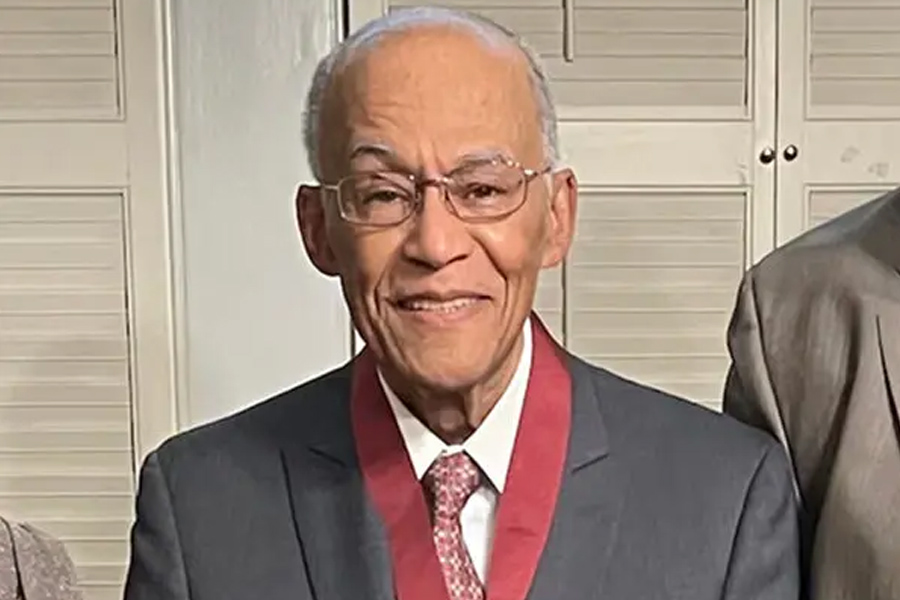
Donald J Harris is a Jamaican-American economist and professor emeritus known for his work on development economics, growth, income distribution, and Jamaican economic policy. He was born in Jamaica in 1938 and spent much of his career at Stanford University.
Who are Donald J Harris’s immediate family members?
His parents were Oscar Joseph Harris and Beryl Christie Harris. His spouse was Shyamala Gopalan Harris, and he later married Carol Kirlew. His children are Kamala Harris and Maya Harris. His grandchild is Meena Harris.
What is Donald J Harris best known for in his career?
He is best known for his academic work in economics, especially development, capital accumulation, and distribution, along with his role as a Stanford professor and his policy-related work on Jamaica’s economy.
Did Donald J Harris write books?
Yes. His best known book is Capital Accumulation and Income Distribution. He also wrote on Jamaican growth and export strategy, among other economics topics.
What role did Jamaica play in his life?
Jamaica shaped both his identity and his scholarship. He was born there, raised in a family with deep local roots, and later returned to Jamaican development questions through research, policy advising, and public engagement.
How is Donald J Harris connected to Kamala Harris?
Donald J Harris is Kamala Harris’s father. He and Shyamala Gopalan Harris were married and had two daughters, Kamala and Maya.
What makes his family background notable?
His family background links Jamaican rural and town life, commercial tradition, education, migration, and public leadership. The family story runs from grandparents and parents in Jamaica to daughters and grandchildren with global visibility.